
Shennah Preble
Shennah investigates long-term trends in the planetary boundary layer (PBL), the lowest portion of the atmosphere that directly interacts with Earth’s surface, across diverse climate regions over the past two decades. Using reanalysis products and NASA Earth observation datasets, she will analyze how key variables such as surface heat fluxes, wind shear, soil moisture, humidity, and cloud cover influence boundary layer structure and evolution under a changing climate. A central question driving the work is whether the apparent absence of clear PBL height trends in existing data reflects true atmospheric compensation or simply the limitations of current observational methods.
As an undergraduate student, Shennah is helped to develop a new class MEA 493/594 594 Environmental Sciences Instrumentation Course. The objective of the class is to develop a comprehensive environmental sensing and instrumentation course for NC State University undergraduate and graduate students. This course provides hands-on experience with environmental monitoring technologies, filling a critical curriculum gap while preparing students for careers in atmospheric sciences, marine sciences, earth sciences, hydrology, and environmental engineering.
MS Student

Jonah Hazelwood
My research involves designing a mobile data acquisition system (DAQ) to accurately measure sub-20 nm nanoparticle concentrations and emissions based on known sources, sinks, and behavioral patterns of nanoparticles.
PhD Student
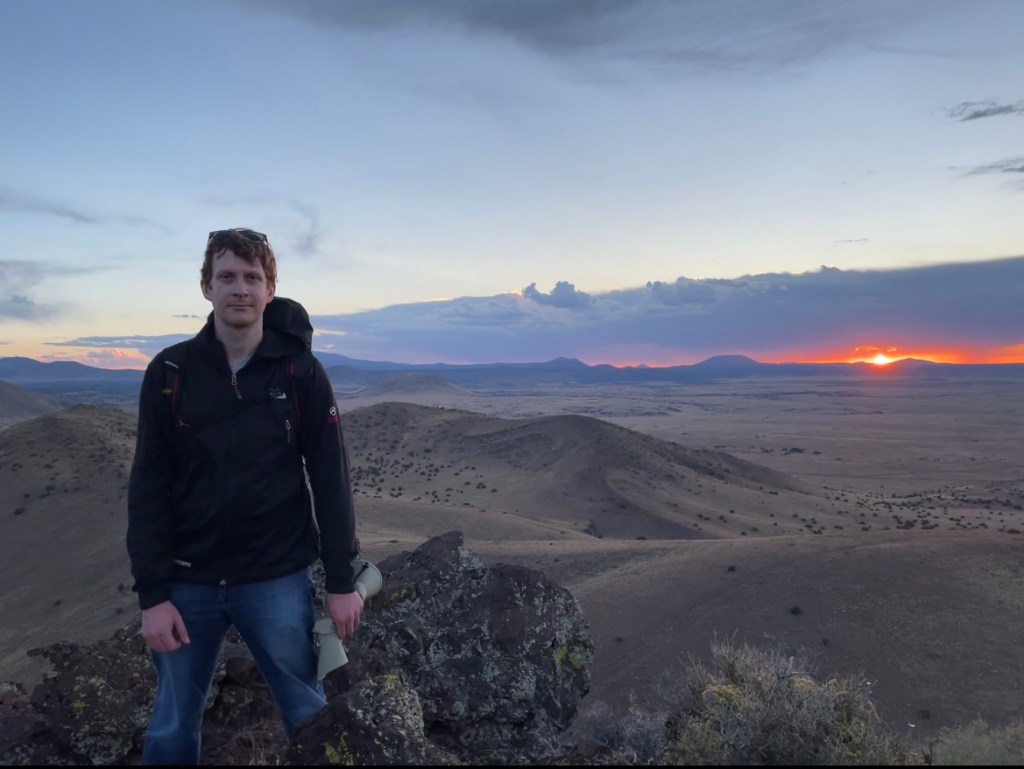
Matthew Romm
My research focuses on ocean-atmosphere interactions, with an emphasis on how iron aerosol deposition influences phytoplankton growth. My work makes use of both modeling techniques using the Community Earth System Model (CESM) and remote sensing.
PhD Student
Tracking Invisible Threats: Sub-10 nm Particle Sources and Health Impacts
Mapping urban air pollution at the nanoscale – identifying sources of ultrafine particles (<100 nm) and sub-10 nm particles that can penetrate deep into lungs and even cross the blood-brain barrier. Using mobile measurement campaigns combined with atmospheric dispersion modeling (AERMOD) to pinpoint hotspots near roadways, airports, and industrial sources. These tiniest particles dominate particle number concentrations but remain largely unregulated – understanding their spatial distribution is critical for protecting public health, especially in environmental justice communities.

